
Introducing UX Practices for Design Team Workflows
Improved a buggy and unintuitive internal design tool by introducing usability testing, shared communication, and workflow optimizations to reduce friction and speed delivery.
Reynolds & Reynolds
UX Lead
1 Year
Problem
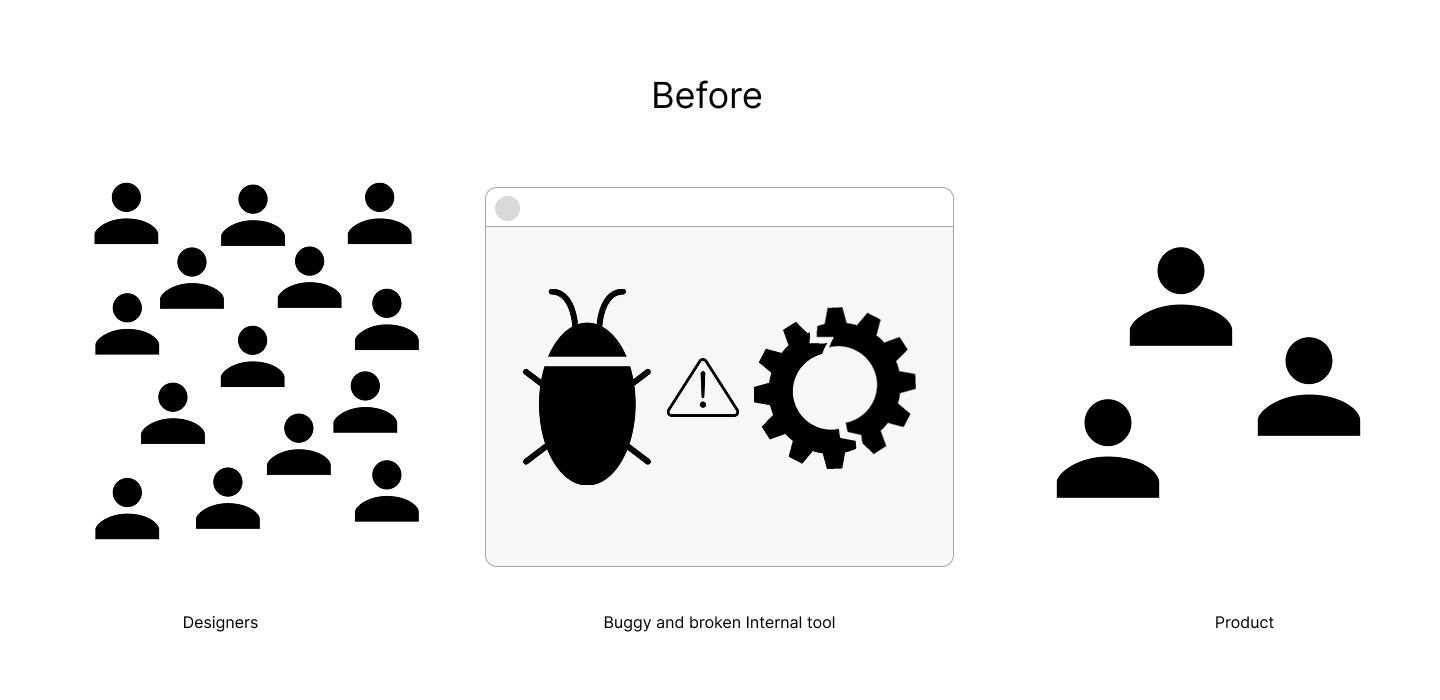
Designers relied on internal, closed-source software that was buggy and unintuitive. These issues increased design time, caused repeated errors, and led to frustration across the team.
- Product worked with Dev without Design (users).
- Designers were unaware and confused with the tool.
- No UX role or practices existed.
Role + Scope
Responsibilities
- Introduced UX practices in a team without a formal UX function
- Led small team to conduct usability testing within internal tool
- Identified workflow breakdowns and recurring usability issues
- Created shared communication to align Product and Design
Collaborators + Constraints
- Partnered with product and development teams
- Worked within closed-source software limitations
- Balanced UX improvements alongside campaign deadlines
Strategy + Approach
Without formal UX ownership or control over the tool’s development, I focused on introducing practical UX practices that could deliver immediate impact. This approach prioritized clarity, adoption, and operational efficiency over visual redesign.
- Conducted lightweight usability testing directly within the internal tool
- Observed designers using new updates in real time
- Identified bugs, unclear behaviors, and workflow friction
- Documented fixes, workarounds, and changes as updates shipped
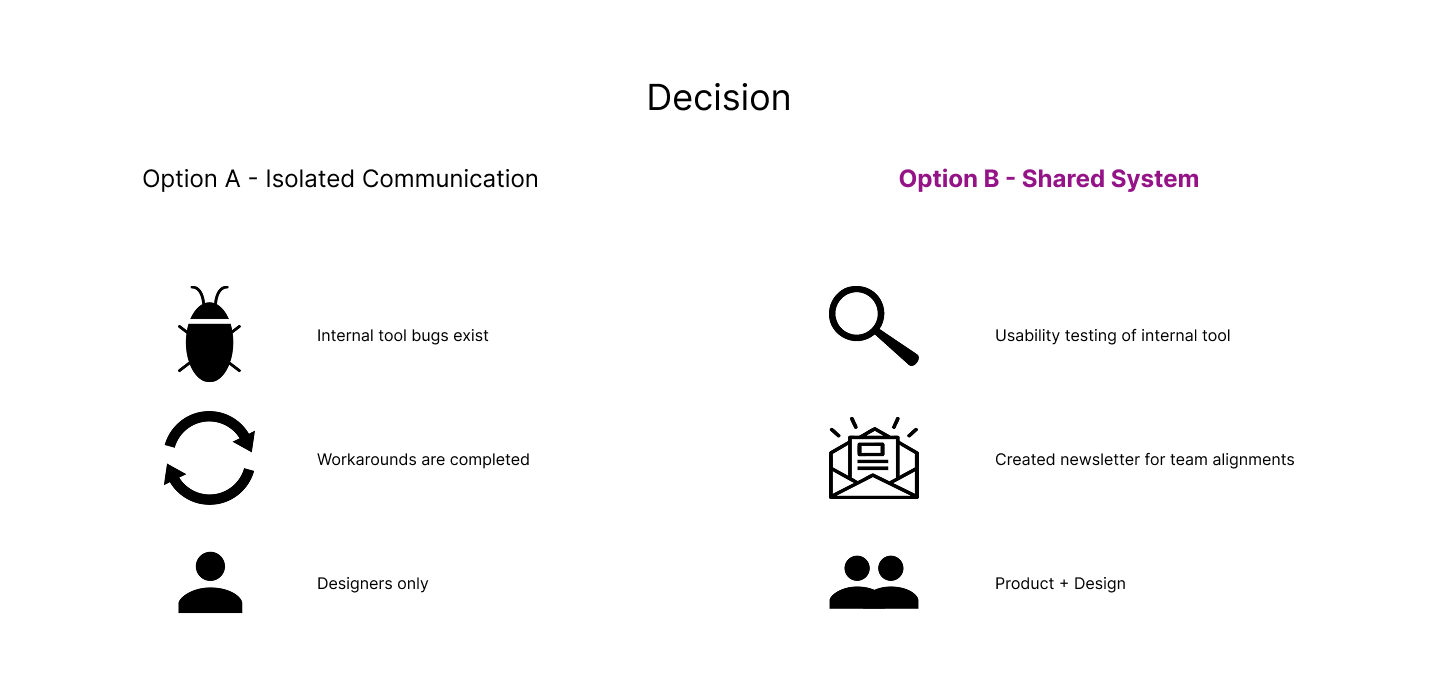
- Created a shared newsletter to communicate to both Product and Design
Key Decisions
Introduced usability testing without a formal UX mandate
Why it Mattered
Usability issues were known anecdotally but not systematically understood.
Usability issues were known anecdotally but not systematically understood.
Tradeoff
Testing required trust and buy-in without an established UX role.
Testing required trust and buy-in without an established UX role.
Outcome
Actionable insights that directly informed workflow improvements.
Actionable insights that directly informed workflow improvements.
Solution Overview
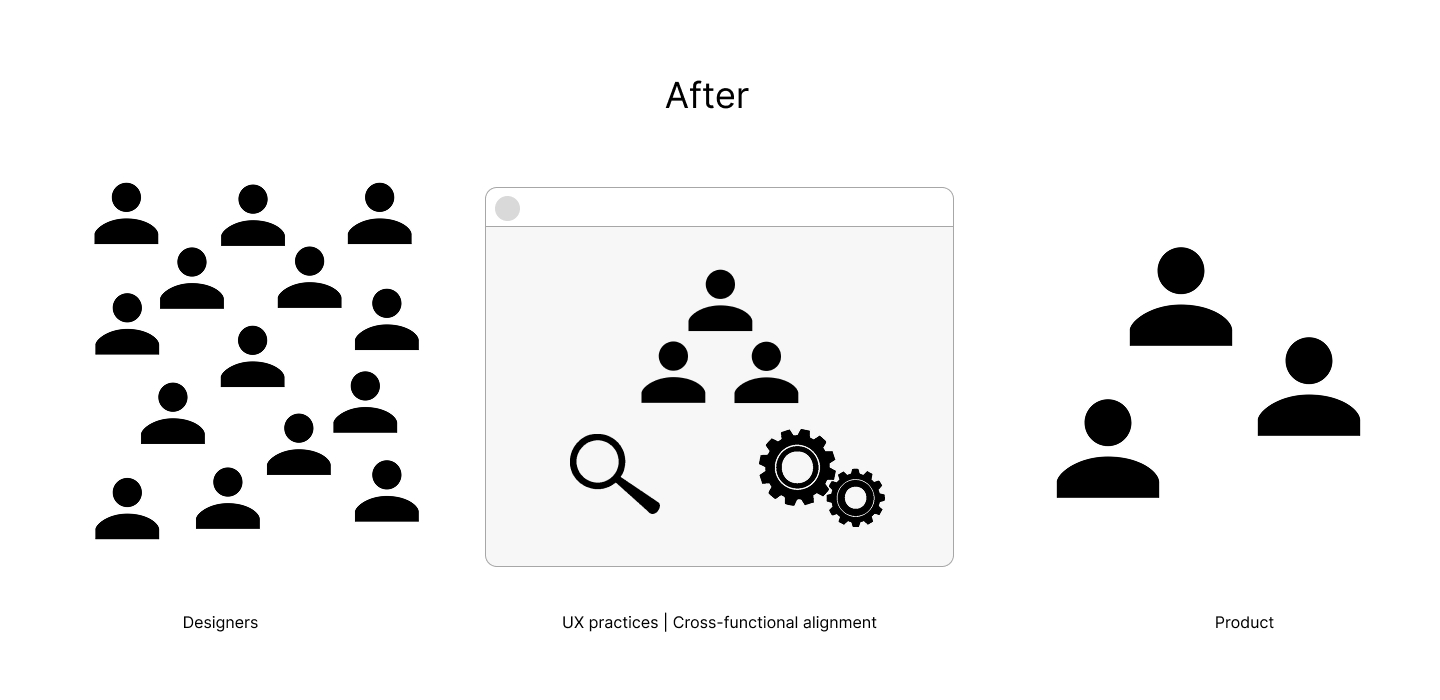
I introduced a lightweight UX system centered on usability testing, real-time documentation, and shared communication. Each update to the internal tool was tested as it shipped, documented clearly, and communicated through a recurring newsletter.
Designers understood what changed, how to adapt, and which issues were resolved. This established a predictable feedback loop between Product and Design without a formal UX role.
Outcomes + Impact
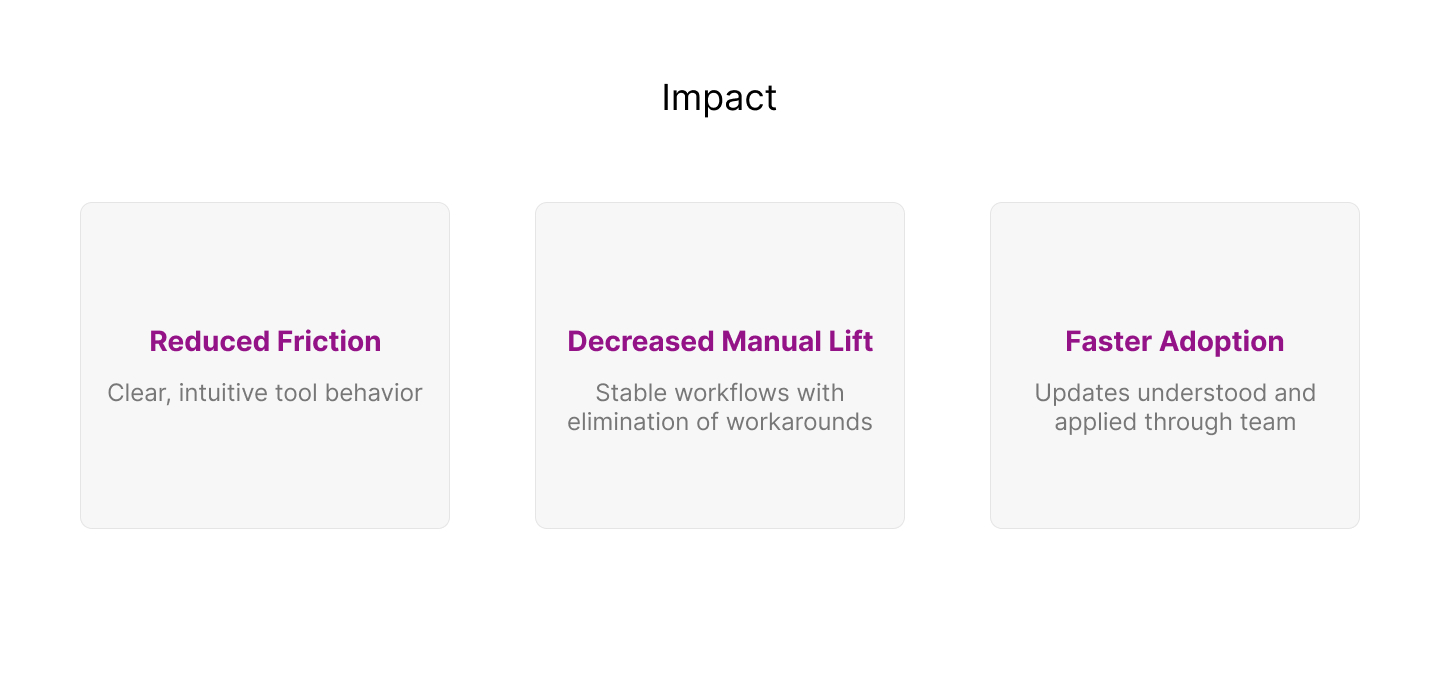
Reduced friction
Addressed pain points resulted in clearer workflows.
Decreased manual lift for designers
Documentation of fixes and temporary workarounds replaced individual troubleshooting.
Reduced design team errors
Updates were understood by designers, minimizing rework and mistakes.
Reflection
What worked
Introduced usability testing and shared updates, which reduced errors and aligned Product and Design.
What I would improve
Involve Product earlier and provide guidance with updates to prevent knowledge gaps.
What I would do next
Expand the UX system to other internal tools and track metrics to measure time saved and smoother workflows.
Introduced usability testing and shared updates, which reduced errors and aligned Product and Design.
What I would improve
Involve Product earlier and provide guidance with updates to prevent knowledge gaps.
What I would do next
Expand the UX system to other internal tools and track metrics to measure time saved and smoother workflows.