
Accelerating Sales with Automated Inventory Alerts
Identified a systemic revenue gap caused by the complete absence of a sales notification system. Designed and built Land.com's first automated inventory alert channel from scratch, eliminating manual discovery, scaling to 50+ salespeople and generating $30K+ in new revenue within its first year.
Land.com
Workflow Strategist
3 Months
Problem
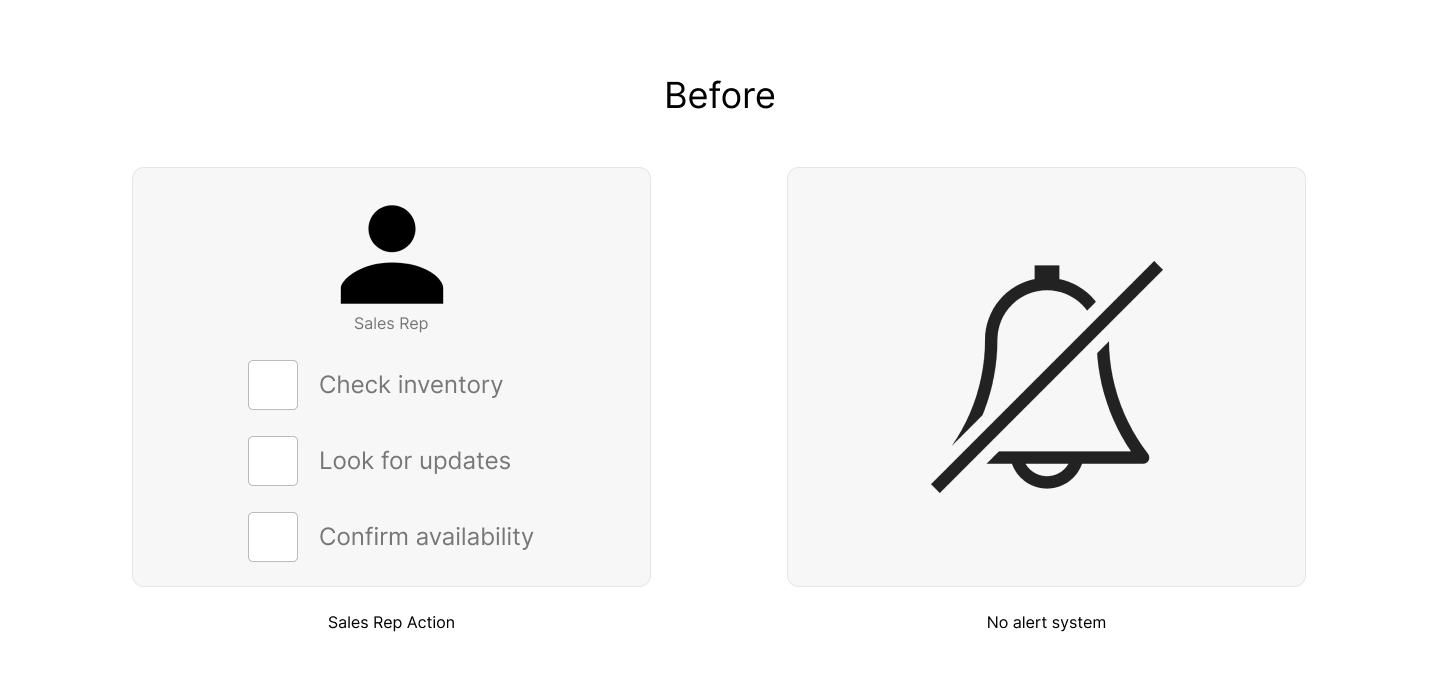
Sales relied on manually hunting for new inventory with no consistency, no tracking, and no visibility. This resulted in a risk of lost revenue and missed opportunities. There was no communication system.
- Sales had no notification system, new inventory discovery was manual and individual
- There was no way to track how long inventory sat unseen by the team
- Revenue was being left on the table with no visibility into how much or how often
Role + Scope
Responsibilities
- Designed the end-to-end workflow
- Defined requirements for sales-facing alerts
- Implemented and tested the automation
Collaborators + Constraints
- Partnered with sales leadership
- Worked within existing internal systems
- No prior system, no existing model to reference, no formal infrastructure
- Full ownership of problem definition, solution design, and implementation
Strategy + Approach
With no predefined direction and full ownership of the problem space, I focused on diagnosing why inventory visibility was failing. The core insight was that this was an absence problem. No communication system existed between inventory availability and sales awareness.
- Evaluated notification options; solution had to be within Sales tool constraints
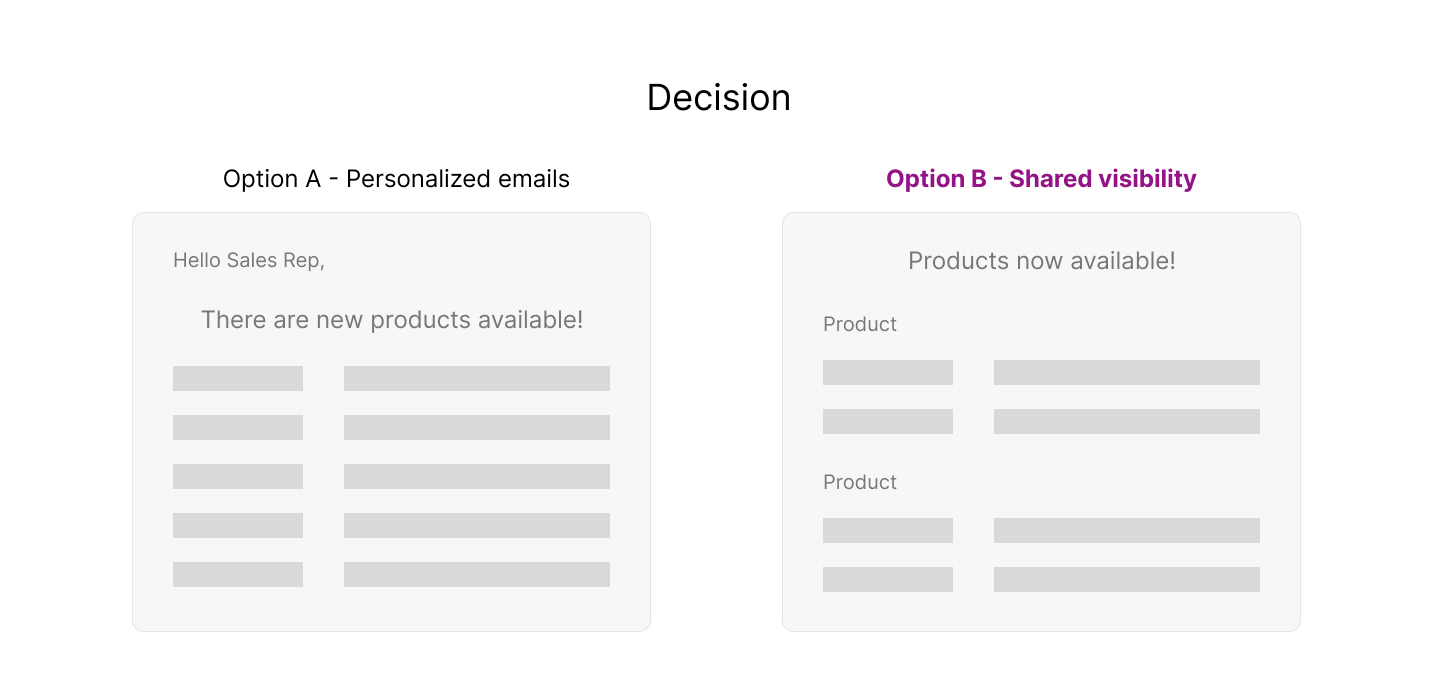
- Chose a shared channel over individual emails to guarantee shared visibility
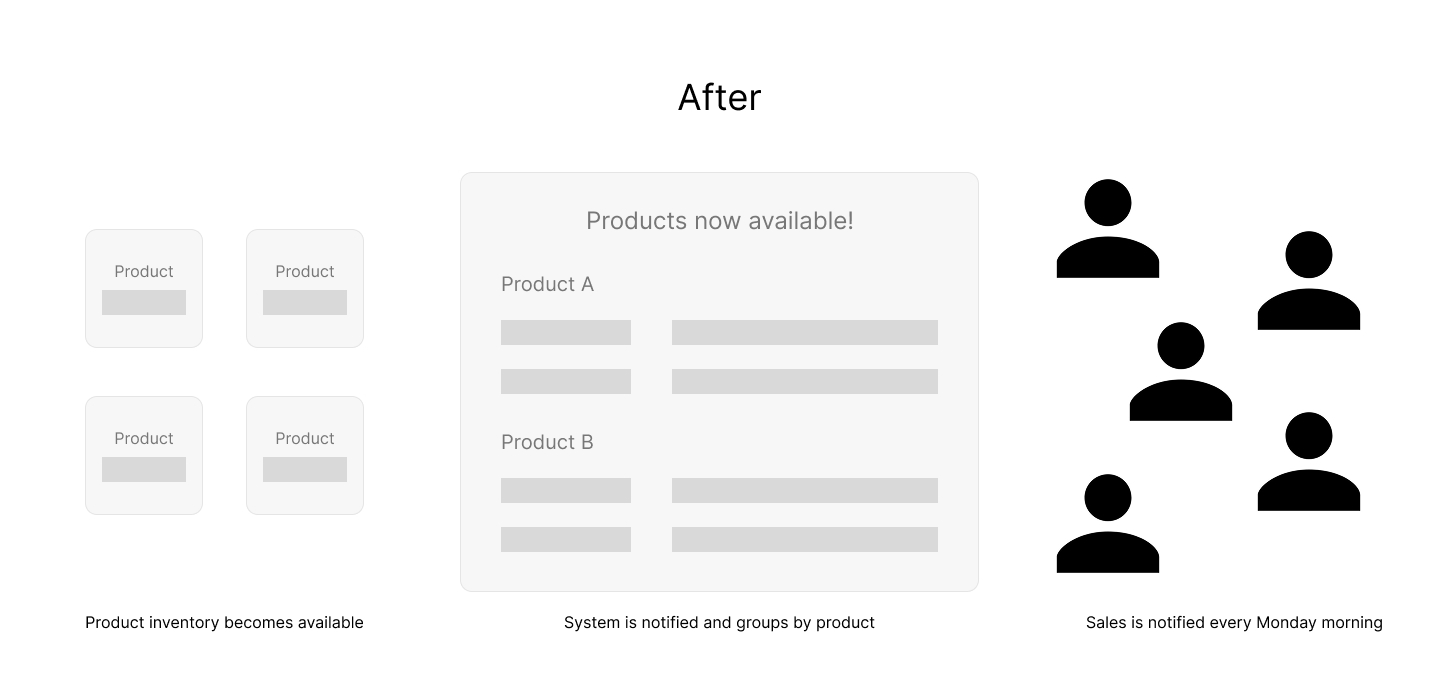
- Automate the notification system in order to eliminate manual upkeep entirely
- Piloted with Regional Sales Directors before scaling to the full 50+ person sales org
Key Decisions
Implemented an automated shared communication channel
Why it Mattered
Sales had no existing system to learn about new inventory other than manually checking themselves.
Sales had no existing system to learn about new inventory other than manually checking themselves.
Tradeoff
Lost one-to-one personalization in individual emails in favor of shared visibility.
Lost one-to-one personalization in individual emails in favor of shared visibility.
Outcome
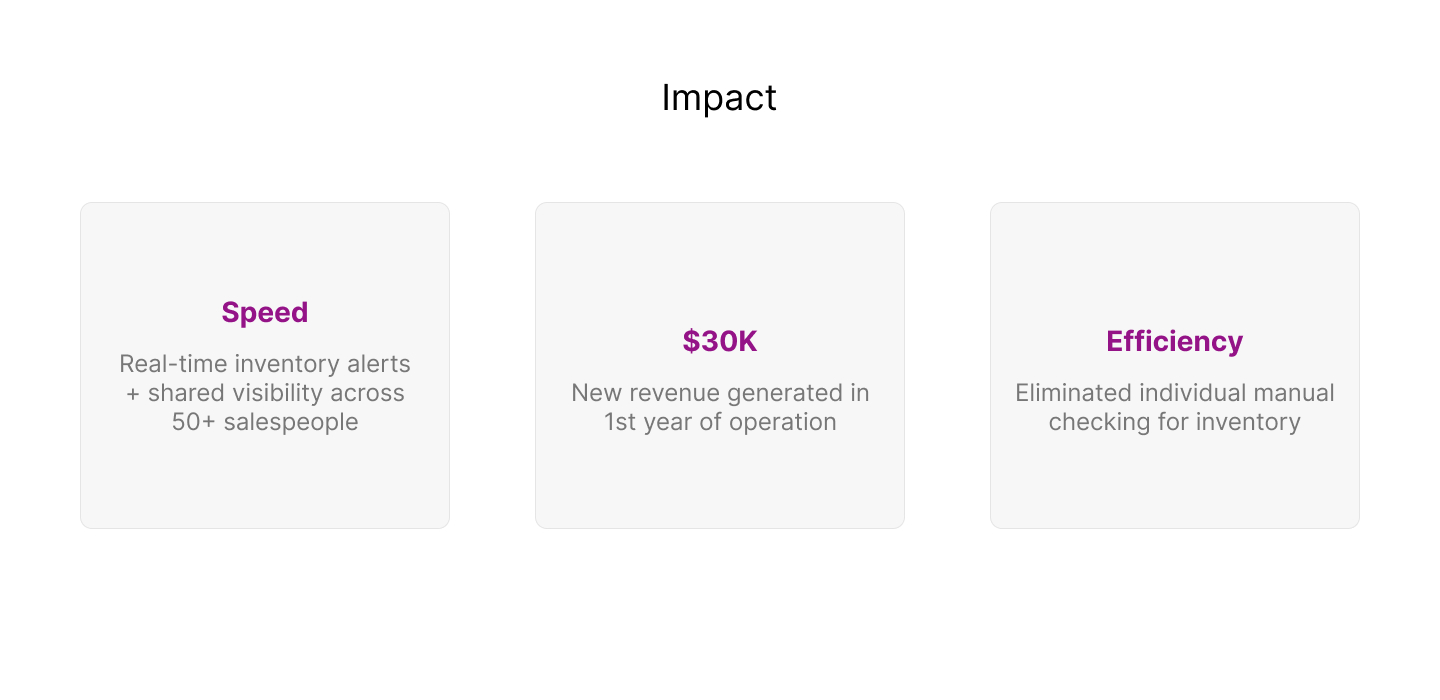
Sales received updates simultaneously and without delay, generating $30K+ in new revenue in the first year.
Sales received updates simultaneously and without delay, generating $30K+ in new revenue in the first year.
Solution Overview
With no prior notification system to build from, I designed and implemented Land.com's first automated inventory alert system from scratch. The solution centered on a shared channel vs. individual notifications. Alerts were standardized for quick scanning, so Sales could identify and act on new inventory immediately. This would eliminate the lag between availability and awareness that had been costing the team revenue.
Outcomes + Impact
$30K+ in new revenue generated
The alert system enabled faster sales response to new inventory in its first year of operation (2025).
50+ salespeople on boarded to a system that didn't exist before
Scaled from a pilot launch with Regional Sales Directors than to the full sales organization (Directors, Reps, and Inside Sales).
First automated notification channel built for this sales team
Eliminated individual manual discovery of inventory with no prior infrastructure to build on.
Cadence optimized based on real usage patterns
Launched at a daily frequency, then refined to weekly as adoption matured, ensuring signal stayed high-value vs. becoming noise.
Reflection
What worked
Centralized alerts reduced friction and improved speed with minimal effort.
What I would improve
Introduce filters for inventory type.
What I would do next
Connect alert engagement directly to closed deals, tracking which inventory items led to sales activity. This could help build the case to expand the model to other revenue-critical communication gaps across the organization.
Centralized alerts reduced friction and improved speed with minimal effort.
What I would improve
Introduce filters for inventory type.
What I would do next
Connect alert engagement directly to closed deals, tracking which inventory items led to sales activity. This could help build the case to expand the model to other revenue-critical communication gaps across the organization.
© Samantha C. Garcia | 2026