
Building the Operational Infrastructure Behind Ad Operations
Identified systemic misalignment across Ad Operations Design team caused by undocumented processes, inconsistent designer discretion, and widespread policy gaps in both Marketing and Sales. Built Land.com's first centralized knowledge hub system from scratch, reducing campaign turnaround by 1-2 days and becoming the organization's standard on boarding resource.
CoStar Group
Design Operations & Systems Lead
4 Months
Problem
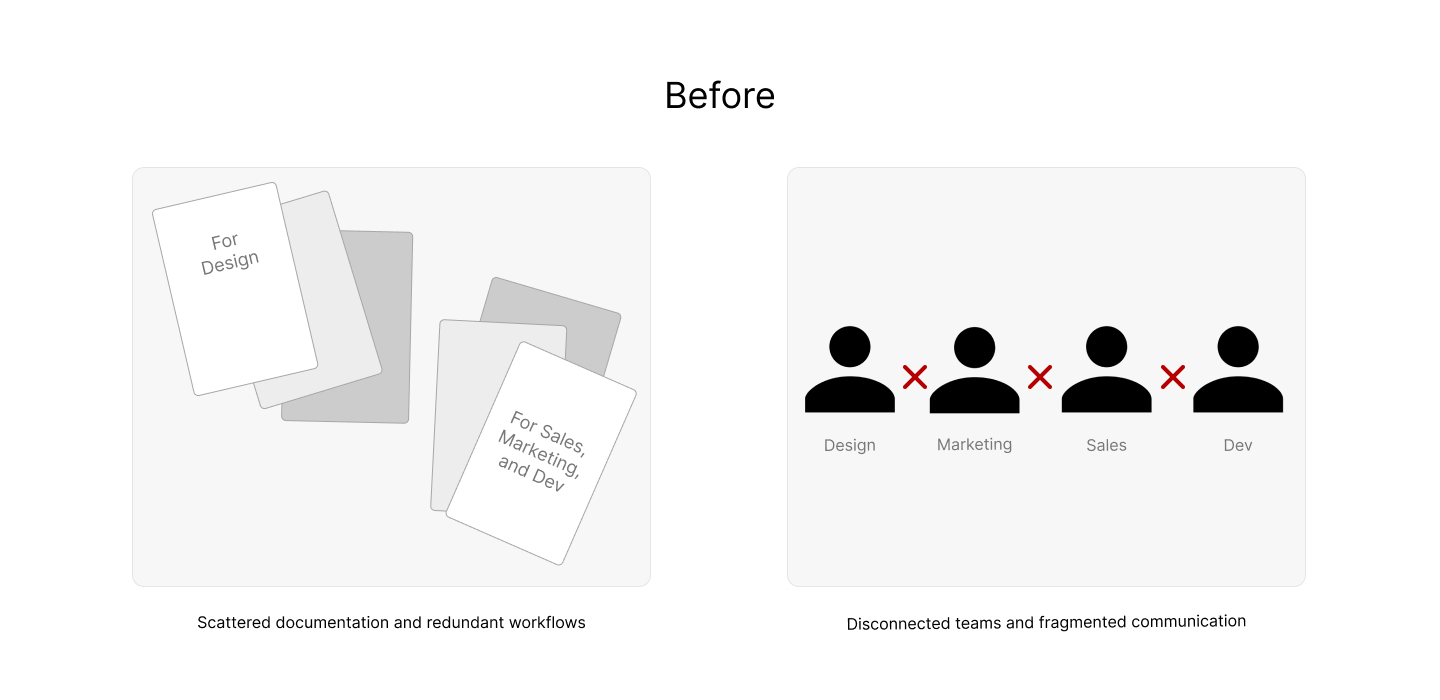
No thorough documentation existed. Every process lived in individual designers' heads. Sales reps and Account Managers struggled to retain product purposes and policy differences. Errors surfaced when Design pushed back, creating downstream delays, client dissatisfaction, exception requests, and rework.
- Processes weren't standardized with outputs varying by designer discretion
- Sales reps lacked concrete policy knowledge, resulting in incorrectly sold products
- No on boarding resource existed for new reps to navigate complex, product-specific rules
- Campaign delays, client dissatisfaction, and cross-functional friction were recurring cost
Role + Scope
Responsibilities
- Analyzed and streamlined design workflows for Ad Operations
- Identified bottlenecks across Design, Marketing, and Sales teams
- Developed visual communications to centralize knowledge and policies
- Coordinated adoption of new workflows and knowledge hub across teams.
Collaborators + Constraints
- Collaborated with Marketing, Sales, and AdOps Design teams
- Worked with limited formal UX/Design Ops structures
- Balance workflow optimization with clarity for cross-functional teams
Strategy + Approach
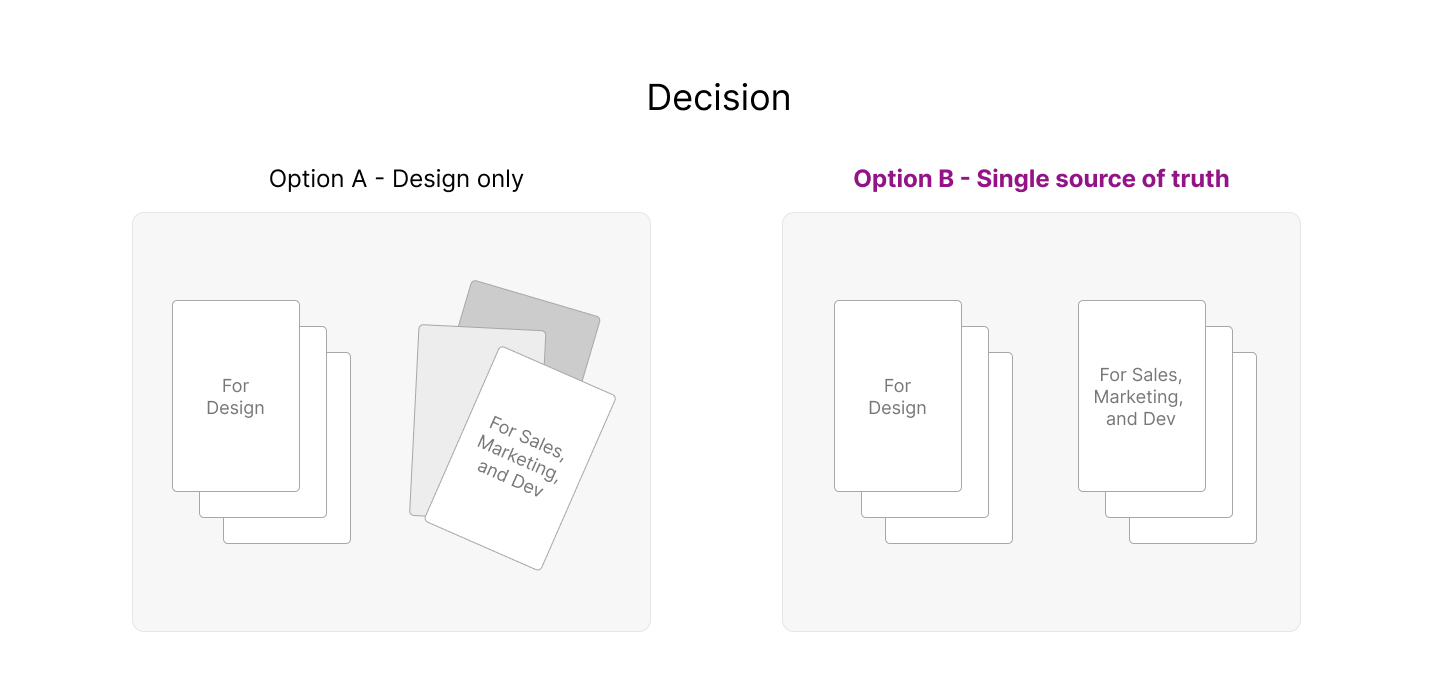
Recognized that the recurring misalignment wasn't a communication failure but a structural one. Without a single source of truth, every team operated from incomplete and inconsistent product knowledge with nothing in place to correct it.
- Audited workflows across Design, Marketing, and Sales before proposing a solution
- Chose visual resources vs. static documents for the complexity of product-specific policies
- Prioritized building within existing tools rather than introducing new ones
- Designed a living document for longevity vs. a file that became outdated when policies changed
Key Decisions
Developed internal communications to centralize product information and policies
Why it Mattered
Without a single source of truth, products were sold incorrectly to clients resulting in rework, client dissatisfaction, and exception requests against product policies.
Without a single source of truth, products were sold incorrectly to clients resulting in rework, client dissatisfaction, and exception requests against product policies.
Tradeoff
Building a new centralized resource risked low adoption if not trusted; it required careful format decisions and ongoing updates to ensure it remained accurate and wasn't ignored.
Building a new centralized resource risked low adoption if not trusted; it required careful format decisions and ongoing updates to ensure it remained accurate and wasn't ignored.
Outcome
Teams gained clear, centralized access, reducing repeated questions, incorrect product sales, and downstream rework. The hub became the standard on boarding resource for new Sales.
Teams gained clear, centralized access, reducing repeated questions, incorrect product sales, and downstream rework. The hub became the standard on boarding resource for new Sales.
Solution Overview
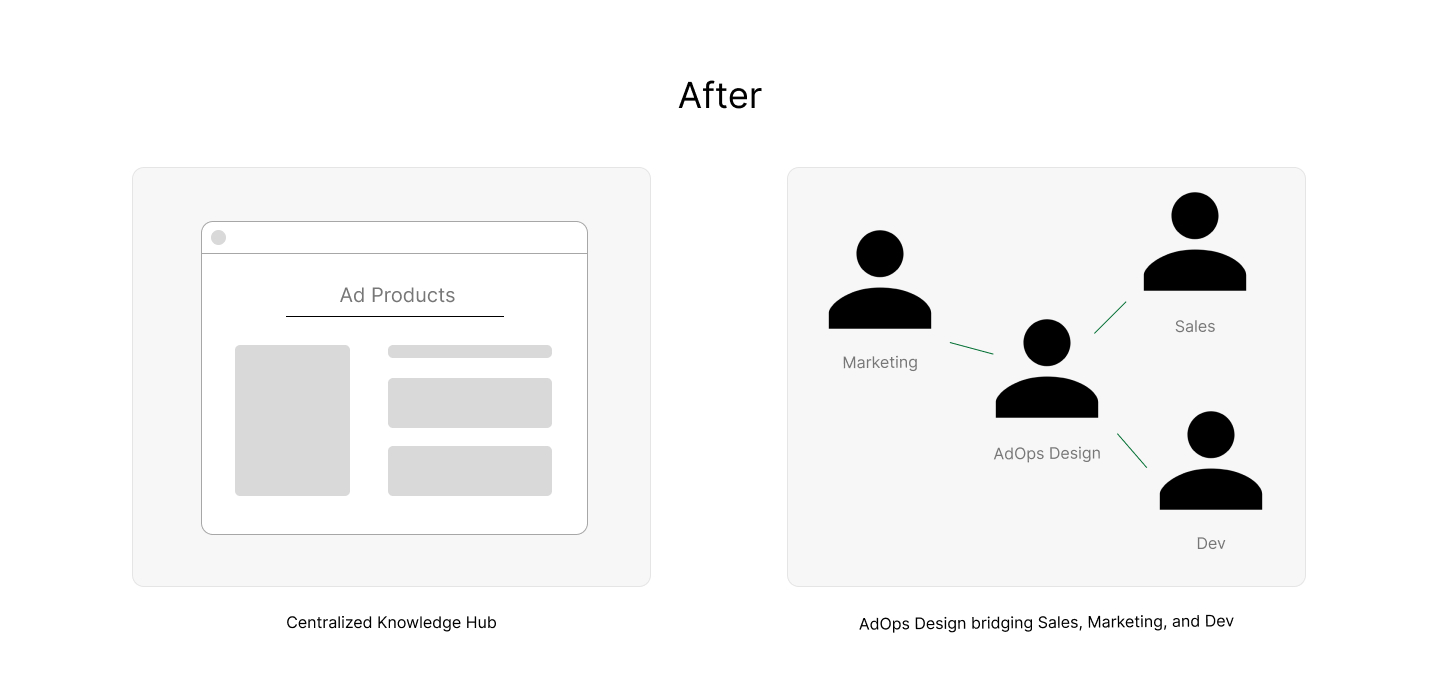
With no existing documentation infrastructure and a recurring pattern of misalignment costing campaigns time and clients satisfaction, I built Land.com's first centralized knowledge hub from scratch. Rather than creating additional static documentation that could become outdated and ignored, I designed the hub as a living resource as products and policies evolved.
What began as a resource to reduce repeated questions from Sales and Marketing became the standard on boarding tool for new Sales reps. It is actively referenced by Senior Directors in the org as the source of truth.
Outcomes + Impact
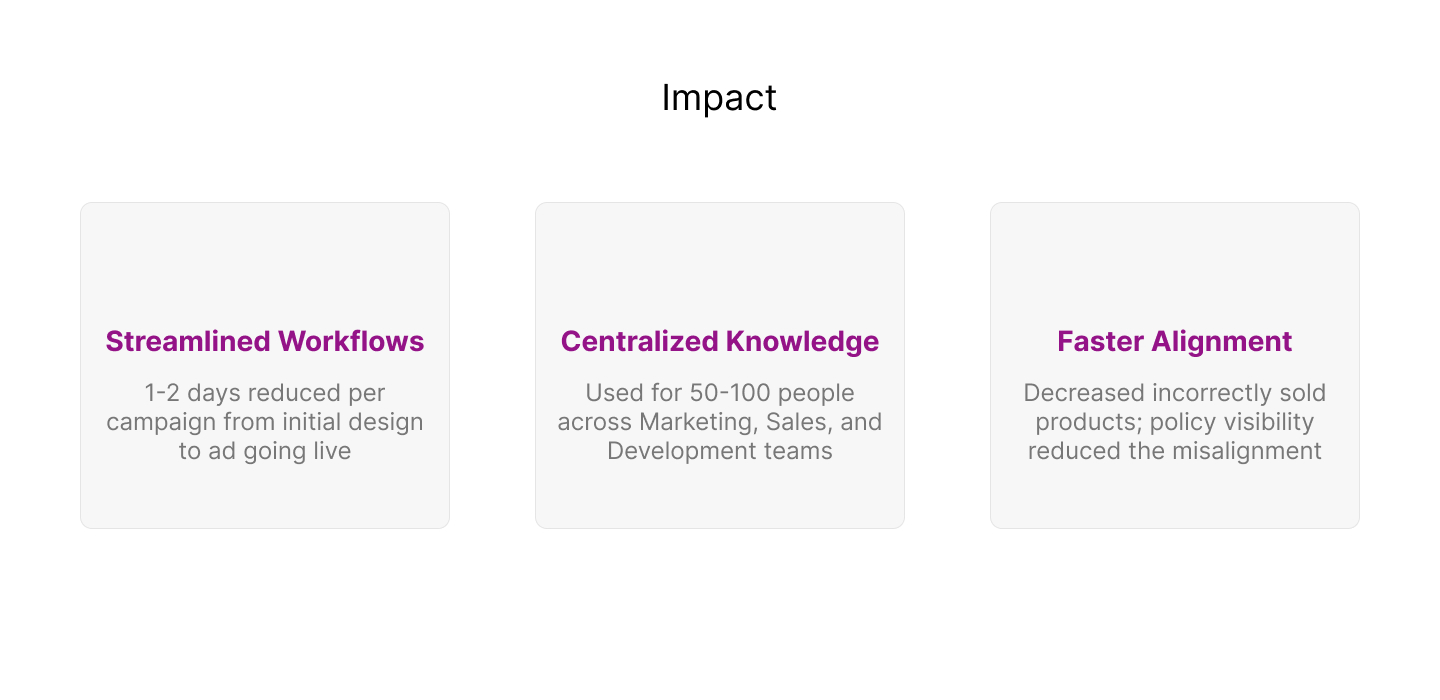
1-2 days reduced per campaign from design to live
Eliminating redundant steps and clarifying specs reduced the time between submission and delivery across Ad Operations.
50-100 people operating from one source of truth
Migrated as organizational needs scaled; now the standard live resource across Sales, Marketing, and Development
Incorrectly sold products decreased
Policy visibility reduced misaligned sales caused by reps not understanding product-specific rules; prevented rework later.
Living infrastructure actively maintained
Senior Directors steer teams to the hub when issues arise; continuously updated for new confusion before it becomes friction.
Reflection
What worked
Visual internal communications and workflow documentation made processes clear and improved team efficiency.
What I would improve
Test communication formats earlier with Marketing and Sales to increase adoption and usability.
What I would do next
Track which pages get the most traffic and correlate with recurring questions to identify policy gaps. Process updates would trigger a hub review, removing dependencies before confusion surfaces.
Visual internal communications and workflow documentation made processes clear and improved team efficiency.
What I would improve
Test communication formats earlier with Marketing and Sales to increase adoption and usability.
What I would do next
Track which pages get the most traffic and correlate with recurring questions to identify policy gaps. Process updates would trigger a hub review, removing dependencies before confusion surfaces.
© Samantha C. Garcia | 2026