
Building Cross-Functional Infrastructure Where None Existed
Identified a systemic operational gap in how a 15+ person design team used, communicated about, and adapted to a closed-source internal tool. Built the organization's first UX feedback system, cross-functional communication system, and shared documentation infrastructure from scratch with no formal mandate and no prior ownership.
Reynolds & Reynolds
UX & Operations Lead
1.5 Years
Problem
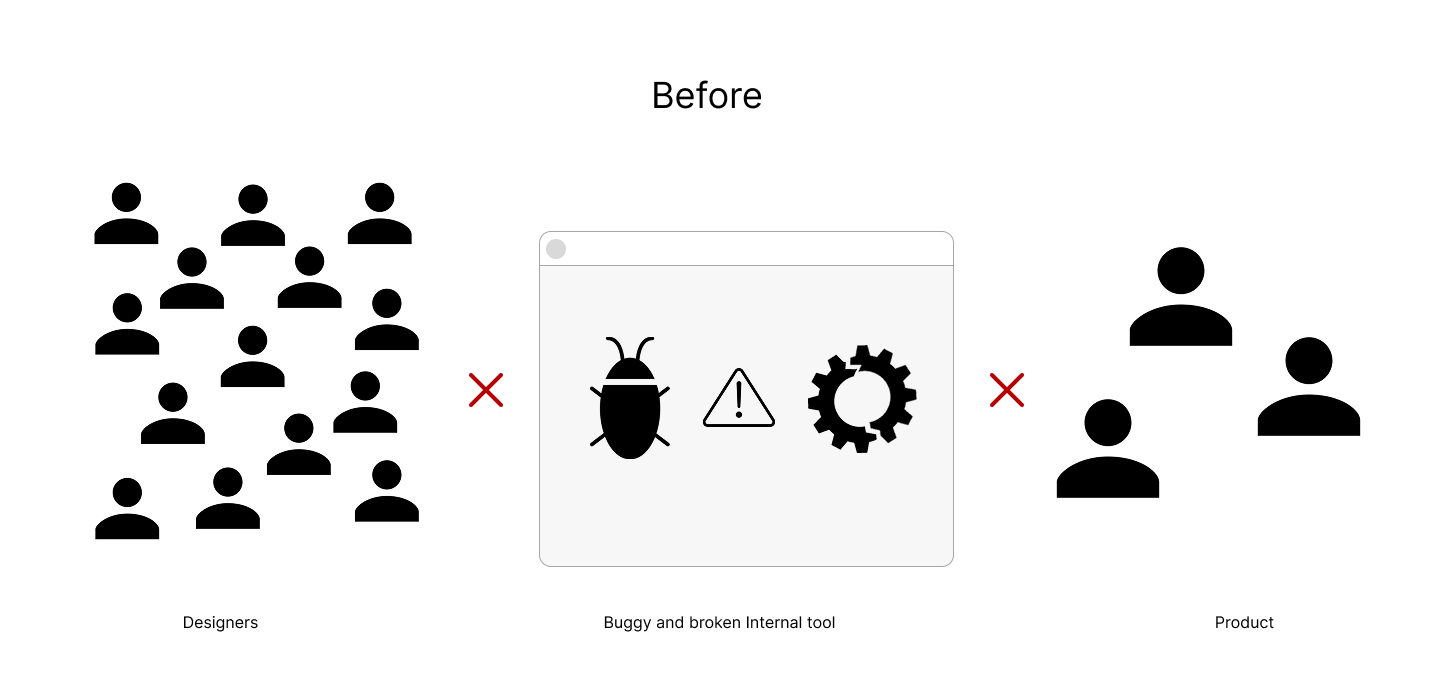
No one owned UX and no documentation existed. Product built without Design input and Engineering shipped releases with no communication. The tool had years of untracked, unresolved feature requests.
- No UX function existed; Product developed internal tool without input from its primary users
- Years of feature requests had gone untracked, undocumented, and unresolved with no owner
- When updates shipped, designers learned them separately, creating individual workarounds
Role + Scope
Responsibilities
- Introduced UX practices in a team without a formal UX function
- Led small team to conduct usability testing within internal tool
- Identified workflow breakdowns and recurring usability issues
Collaborators + Constraints
- Partnered with product and development teams
- Worked within closed-source software limitations
- Operated without formal UX mandate, budget, or dedicated tooling
- Built entirely within existing systems and team capacity
- Balanced UX improvements alongside campaign deadlines
Strategy + Approach
Without formal UX mandate, I focused on building the organizational infrastructure that was missing rather than just identifying usability issues. The approach prioritized operational impact over visual redesign; a feedback loop needed to be built.
- Tool wasn't the core problem; it was the absence of a feedback infrastructure
- Documented every workaround and bug fix as updates shipped for org memory
- Created a monthly newsletter as lightweight cross-functional communication system
- Documented workarounds before permanent solutions (team needed something actionable)
Key Decisions
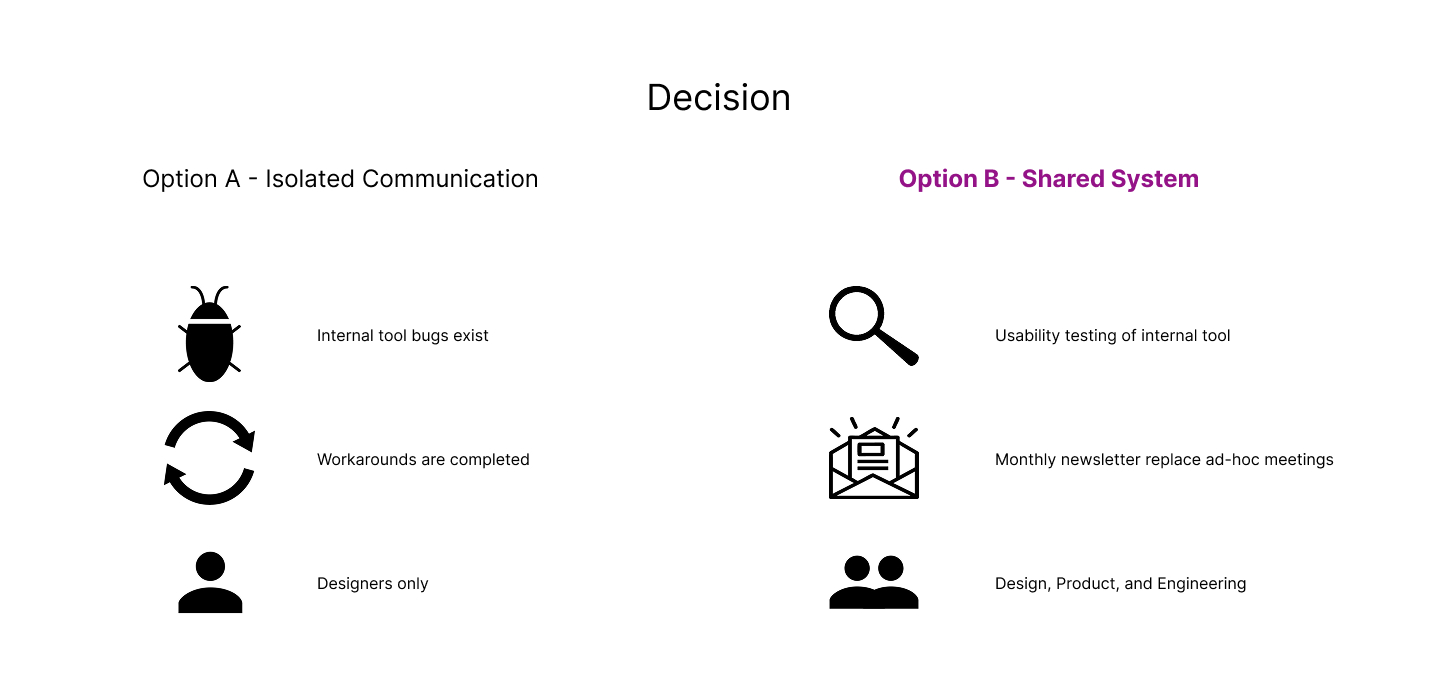
Introduced usability testing without a formal UX mandate
Why it Mattered
Usability issues were known but not formally documented as no one owned the feedback loop between Design, Product, and Engineering.
Usability issues were known but not formally documented as no one owned the feedback loop between Design, Product, and Engineering.
Tradeoff
Testing required trust and buy-in without an established UX role.
Testing required trust and buy-in without an established UX role.
Outcome
A standardized workaround formula for 15+ designers, a monthly newsletter replacing ad-hoc meetings, and a formal document of multi-year backlog requests.
A standardized workaround formula for 15+ designers, a monthly newsletter replacing ad-hoc meetings, and a formal document of multi-year backlog requests.
Solution Overview
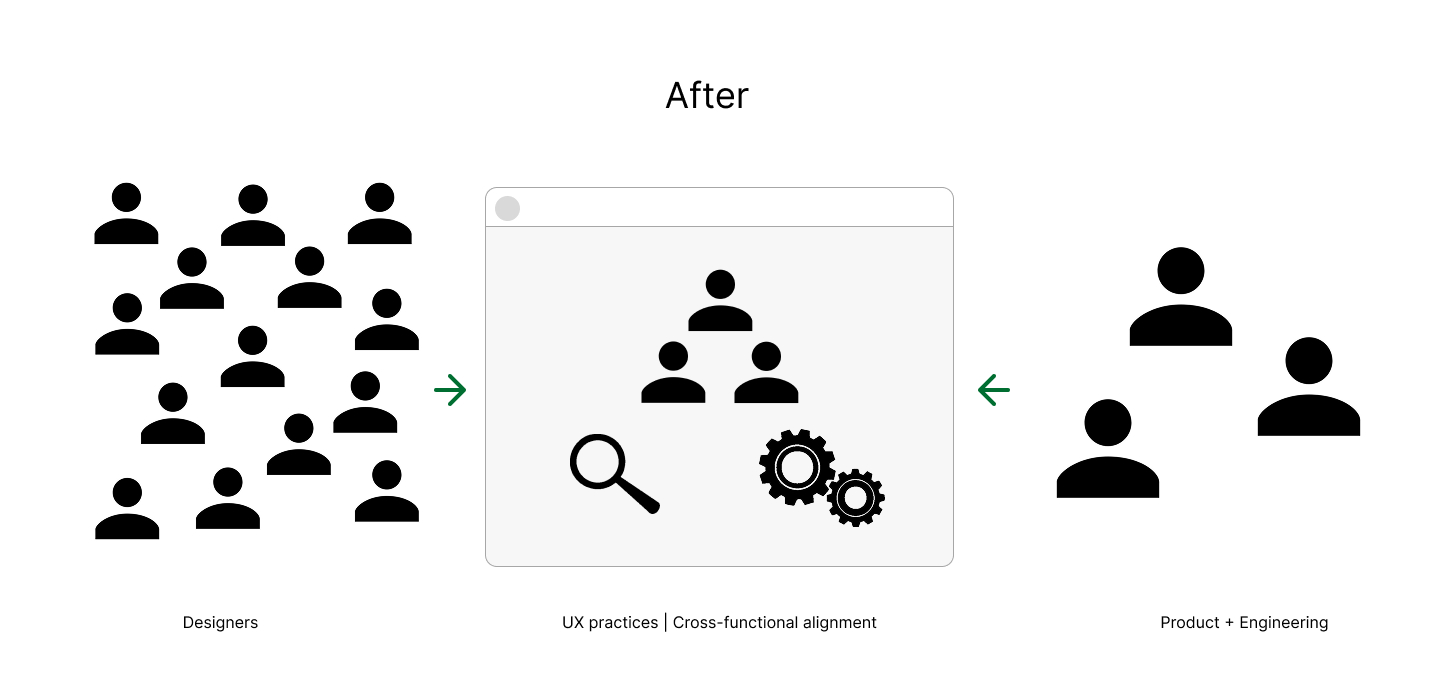
With no formal UX mandate, no existing documentation, and no communication system between Design, Product, and Engineering teams, I built the organizational infrastructure to connect them, starting with the feedback loop that never existed. By introducing usability testing with the internal tool, standardizing workarounds, and creating a monthly cross-functional newsletter, I established a system that absorbed friction vs. leaving designers to solve the same problems individually.
It was the first time the organization had a system for capturing, communicating, and resolving design friction systematically. Designers knew what changed, how to adapt, and where to find answers.
It was the first time the organization had a system for capturing, communicating, and resolving design friction systematically. Designers knew what changed, how to adapt, and where to find answers.
Outcomes + Impact
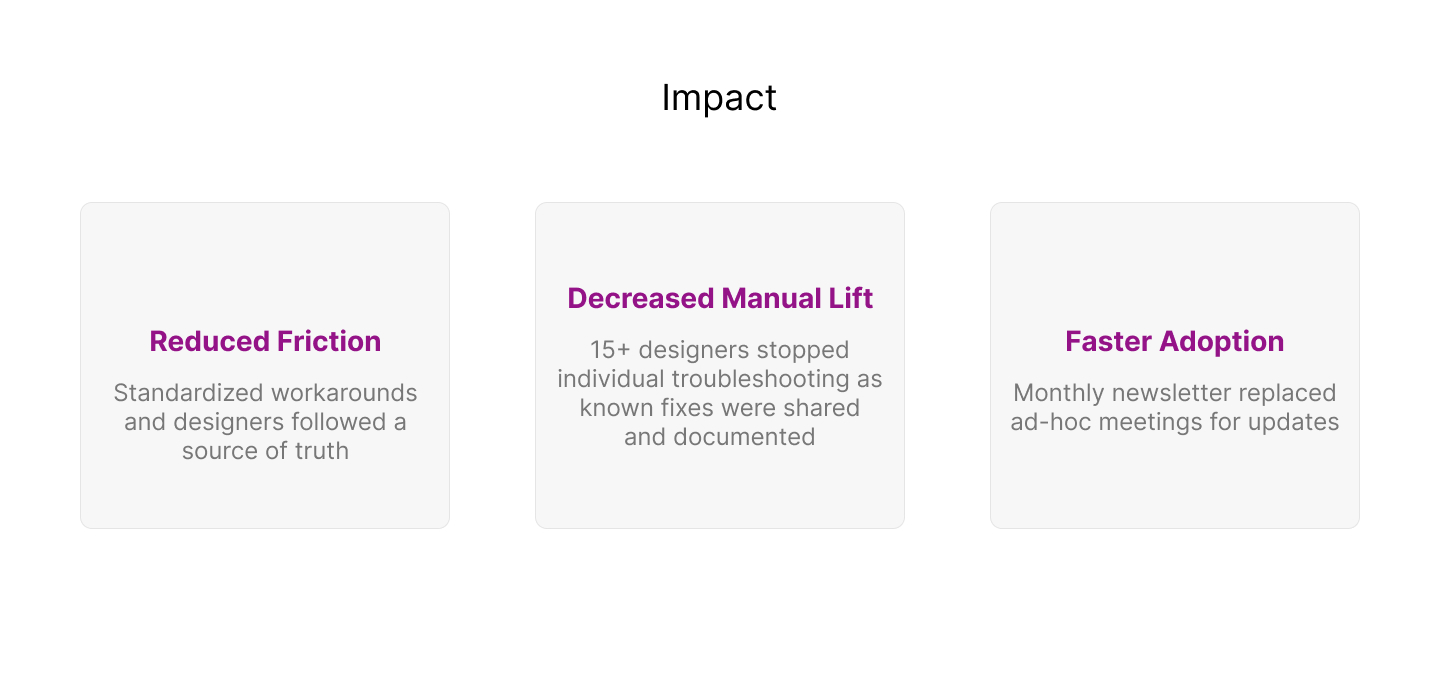
Workaround types standardized across 15+ designers
Eliminated individual troubleshooting by creating a standard to follow the same steps.
First cross-functional communication system between Design, Product, and Engineering
A monthly newsletter replaced ad-hoc meetings and individual discovery; updates were documented, distributed, and retained.
Multi-year backlog of lost feature requests formally documented for first time
No record existed of what had been requested, by whom, or when; this system created organizational memory where none had existed.
Production speed increased
Designers stopped spending campaign build time on individual troubleshooting; known workarounds were documented and shared before impacting delivery.
Reflection
What worked
Introduced usability testing and shared updates, which reduced errors and aligned Product and Design.
What I would improve
Involve Product earlier and provide guidance with updates to prevent knowledge gaps.
What I would do next
Connect newsletter engagement to production metrics and later expand this infrastructure to other internal tools using the same model.
Introduced usability testing and shared updates, which reduced errors and aligned Product and Design.
What I would improve
Involve Product earlier and provide guidance with updates to prevent knowledge gaps.
What I would do next
Connect newsletter engagement to production metrics and later expand this infrastructure to other internal tools using the same model.
© Samantha C. Garcia | 2026